

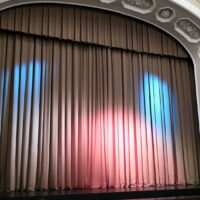
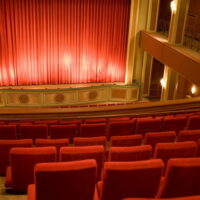
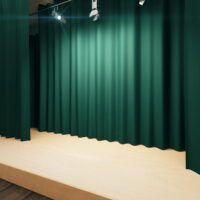
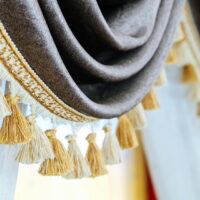
When the house lights dim and a hush falls over the audience, all eyes fixate on one thing: the Grand Drape. Before a single line is spoken or a spotlight flickers to life, the stage curtain sets the mood. It is the boundary between reality and the world of the play.
But stage curtains (or “theatrical drapery”) are much more than just heavy pieces of fabric. They are precision tools designed for acoustics, light blocking, and visual storytelling.
The Anatomy of the Stage
Most people know the “big red curtain,” but a professional stage is a complex layering of different fabrics, each with a specific job:
The Proscenium Arch (The Frame):
Grand Drape (Main Curtain): The primary decorative curtain. Whether it’s a “Traveler” (opens sideways) or a “Fly” (lifts upward), it signals the start and end of the show.
Valance: The short, wide horizontal curtain that hangs in front of the main drape, hiding the hardware and adding a touch of elegance.
The Masking (The “Invisibles”):
Borders: Wide, short curtains used to hide lighting rigs and fly equipment from the audience’s view.
Legs: Tall, narrow curtains on the sides of the stage that mask the “wings,” allowing actors to wait for their cues without being seen.
The Backdrops:
Cyclorama (Cyc): A large, flat, usually white or light grey fabric used to project light and colour—frequently used to create the illusion of a sky.
Scrim: A magical fabric. When lit from the front, it appears solid; when lit from behind, it becomes transparent. It’s the ultimate tool for dream sequences or ghostly reveals.
Fabric Matters: More Than Just Aesthetics
Choosing the right material isn’t just about colour; it’s about safety and physics.